Technology
Biological dominance through nutrient competition.
A targeted high initial dose creates a probiotic majority. In their shared environment, they compete with undesirable bacteria for food and space. This dominance is intended to limit unwanted growth while the selected strains metabolise existing EPS deposits as organic food.
Shared living space. Limited food.
Probiotic and existing bacteria share living space and nutrient sources. The high initial dose shifts their numerical balance in favour of probiotics. Nutrient consumption and competition for space limit the conditions for undesirable bacteria to reproduce. Sustained nutrient scarcity can cause them to die off over time.
Probiotic bacteria do not eat other bacteria. The strains used in the process are selected to avoid building new biofilm and to metabolise the existing EPS matrix – extracellular polymeric substances – as an organic nutrient source. The aim is to reduce existing deposits gradually and limit new biofilm. Progress and performance are assessed at each installation.
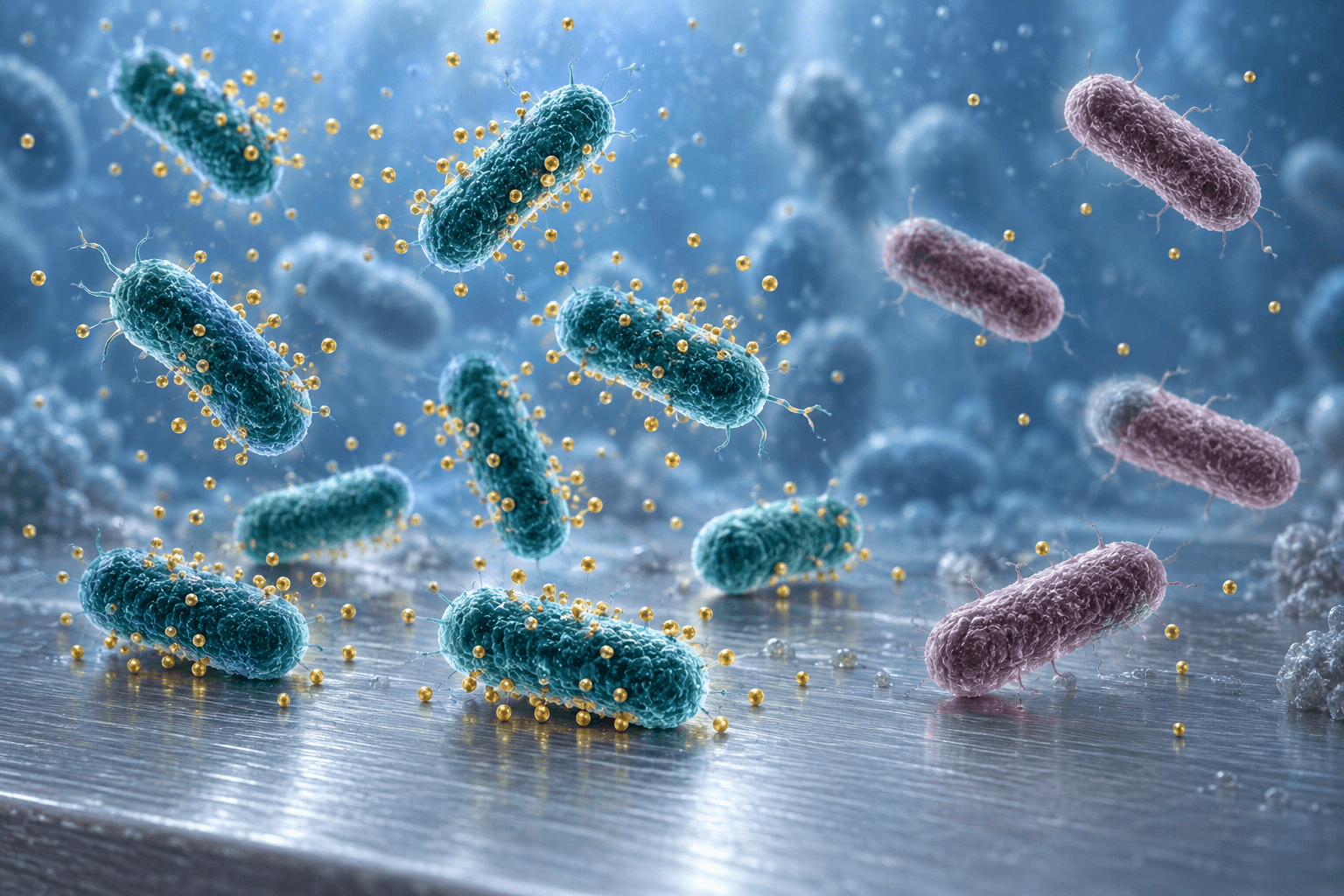
- Probiotic bacteria
- Shared organic nutrients
- Undesirable bacteria
The mode of action in detail.
Probiotic majority
The dosing plan starts with a high initial quantity to establish a numerical probiotic majority. These bacteria share their living space and food sources with bacteria already present.
Competition & regulation
Competition for food and space makes reproduction harder for undesirable bacteria. Bacteria also communicate through quorum sensing. How this changes their activity depends on the strain and environmental conditions.
Population turnover
Both probiotic and undesirable bacteria undergo population turnover. The concept favours reproduction of the selected strains; regular replenishment is intended to maintain their majority. Undesirable bacteria can decline under sustained nutrient scarcity.
EPS breakdown & system care
The selected strains are intended to avoid building new biofilm and to metabolise existing EPS as organic food. The aim is to reduce existing deposits gradually and limit new biofilm. Dosing and monitoring support this process.
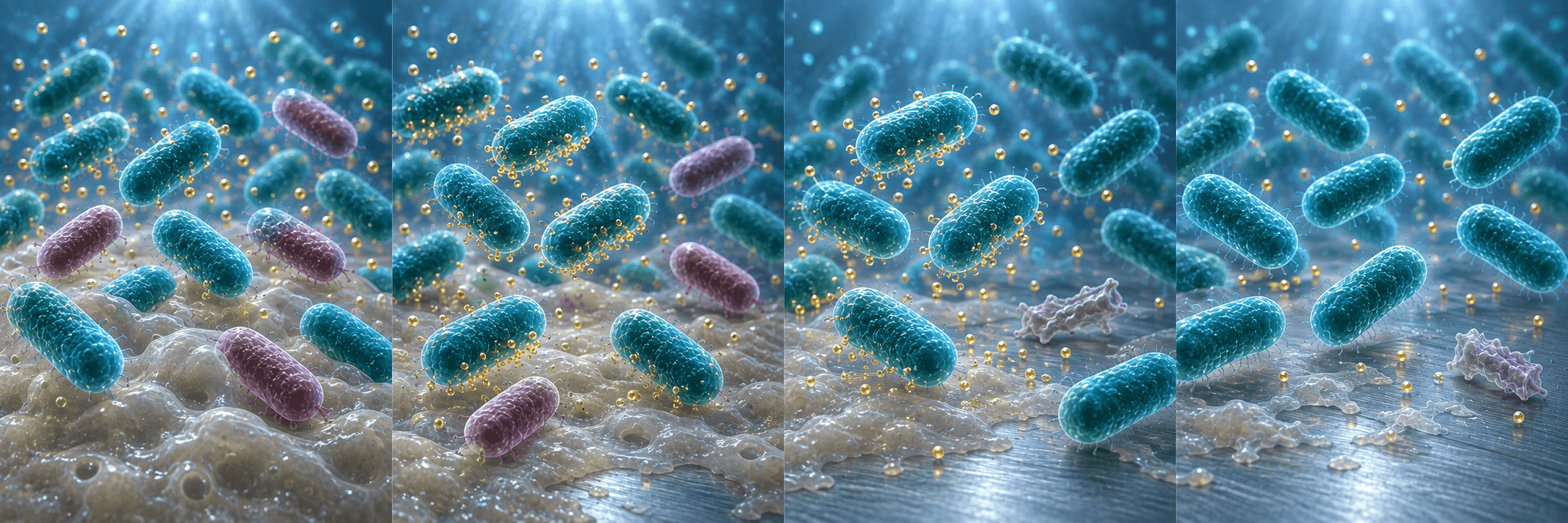 Phase 01Probiotic majority
A targeted high dose establishes a probiotic majority.
- Phase 02Competition & regulation
Both groups share food and habitat. Competition limits undesirable growth.
- Phase 03Population turnover
Undesirable bacteria decline. Dosing and reproduction sustain the probiotic majority.
- Phase 04EPS breakdown & system care
The selected strains use the existing EPS matrix as food. The aim is less existing biofilm and no new biofilm.
- Probiotic bacteria
- Shared organic nutrients
- Undesirable bacteria
- Existing EPS matrix
Technical points to assess.
Material compatibility
Materials, seals and coatings are checked against the information for the proposed product.
Dosing equipment
The injection point, dosing station and any required modifications are identified during the survey.
Microbiological development
Relevant parameters are monitored by sampling; this does not imply a blanket claim about resistance.
Water additives
Compatibility with hardness stabilisers, corrosion inhibitors and pH control is assessed within the treatment programme.
Occupational safety
Product-specific safety information and the workplace risk assessment determine application and required protective measures.
Wastewater
Discharge conditions and potential effects on downstream treatment stages are assessed for each system.